

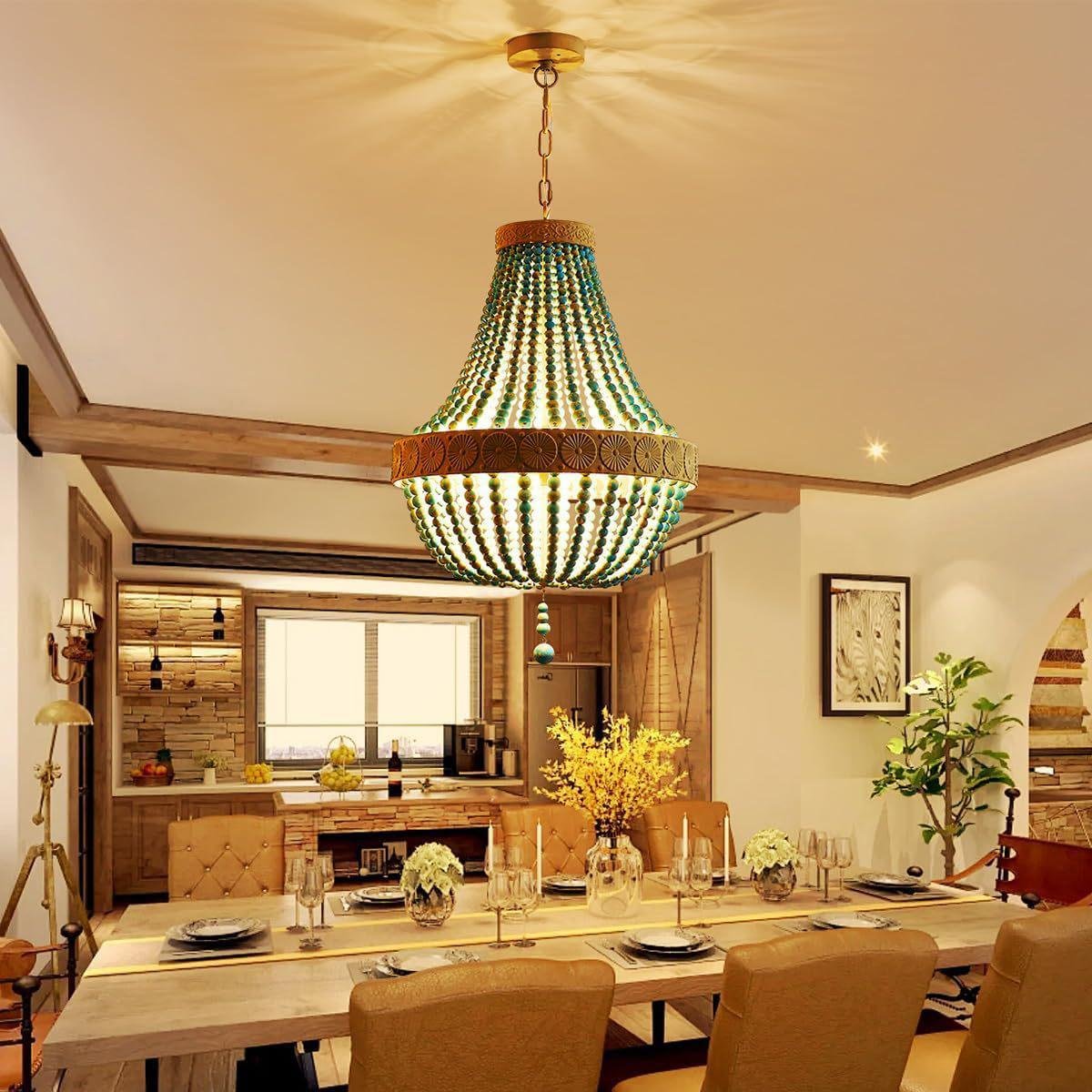
A good ceiling design with light can completely change how a room feels. The ceiling may not be the first thing you notice when entering a home, but the way it is illuminated affects the atmosphere, furniture, colours and overall character of the interior.
Modern homes often use LED strips, recessed lights and cove lighting because they provide clean and practical illumination. However, when these are used alone, the ceiling can sometimes feel visually simple. Adding a chandelier introduces another layer—it gives the room a focal point and turns lighting into part of the interior design.
The most successful ceiling setups do not necessarily choose between LEDs and chandeliers. They use both for different purposes.
A thoughtful ceiling design with light can also make an ordinary room feel more finished without changing the furniture or wall décor. The idea is not to fill every part of the ceiling with lighting, but to create a clear balance between functional illumination and decorative features. Combining subtle LED lighting with a chandelier gives the ceiling depth while keeping the room comfortable for everyday use.
A well-planned ceiling design with light can also make the room feel more organised by visually connecting the ceiling with the furniture below. Instead of treating lighting as a separate feature, the ceiling can become part of the overall interior style.
What Makes a Good Ceiling Design with Light?
A well-planned ceiling should do two things at the same time: provide enough light and support the style of the room.
LED strips hidden inside a false ceiling can create a soft glow around the edges. Recessed lights can brighten specific areas. Spotlights can draw attention to artwork or furniture.
A chandelier does something different.
Instead of disappearing into the ceiling, it becomes visible. Its shape, material and light become part of the room even when the fixture is switched off.
This makes chandeliers particularly useful in living rooms, dining spaces, duplex homes, reception areas and interiors where the ceiling needs more visual presence.
LED Lights or Chandelier: Which Is Better?
There is no need to treat this as an either-or decision.
LED lighting is excellent when you want even illumination and a clean ceiling. Cove lights and recessed LEDs can spread light without adding much visual weight.
A chandelier serves another purpose. It draws the eye toward the centre of the room and can connect the ceiling with the furniture below.
Think of LED lighting as the background and the chandelier as the feature.
For example, a modern false ceiling might use warm cove lighting around the perimeter and recessed spotlights for general brightness. A decorative chandelier in the middle then gives the ceiling a clear focal point.
This combination often feels more complete than relying on only one type of light.
The most balanced ceiling design with light often combines practical LEDs with one decorative chandelier. The LEDs handle everyday illumination, while the chandelier adds the visual character that concealed lighting alone cannot provide.
Make the Chandelier the Centre of the Ceiling Design
If you want the room to feel carefully designed, start by identifying its visual centre.
In a living room, that may be above the main coffee table or seating arrangement. In a dining room, it is usually above the dining table. In a duplex, the chandelier may occupy the open vertical space between floors.
Once that point is clear, the other lights can support it.
A modern chandelier does not always need to be an elaborate crystal fixture. Glass, floral, sculptural and minimalist designs can all become focal points depending on the style of the room.
Nordic International currently carries several chandelier and decorative ceiling-light styles ranging from modern green glass pieces to crystal and gold designs. (Nordic International)
For a softer contemporary look, the Green Glass Luxury Hanging Light uses a modern glass form with ambient illumination and is designed for living and dining spaces. (Nordic International)
View the Green Glass Luxury Hanging Light
False Ceiling with Chandelier and Cove Lighting
A false ceiling with chandelier is one of the easiest ways to combine architectural lighting with decorative lighting.
The false ceiling provides space for concealed LED strips, recessed fixtures or spotlights. The chandelier can then occupy the centre without having to provide every bit of light in the room.
This setup works particularly well when the chandelier and LED lighting have similar colour temperatures.
Warm white cove lighting, for example, can complement gold, crystal and decorative glass fixtures and create a relaxed atmosphere in a living or dining area.
The important part is restraint. Too many ceiling shapes, LED colours and decorative fixtures competing at the same time can make the ceiling feel busy.
If the chandelier is intended to be the statement piece, let the rest of the lighting remain relatively simple.
For many modern homes, a ceiling design with light works best when the chandelier becomes the central feature and concealed LEDs remain in the background. Cove lighting can softly outline the false ceiling, while the chandelier brings attention toward the main seating or dining area. This creates a layered look without making the ceiling feel overcrowded.
If the false ceiling already contains several shapes or levels, keep the additional lighting simple. A clean ceiling design with light usually looks more refined when one element leads visually rather than every fixture competing for attention.
When planning a ceiling design with light, decide first which element should attract attention. If the chandelier is the focal point, use cove and recessed lighting to support it rather than compete with it.
Modern Ceiling Design with Recessed Lights and Chandelier
A modern ceiling design with light does not have to involve a complicated false ceiling.
A flat ceiling with carefully placed recessed lights and one strong central chandelier can look just as effective.
Recessed lights can handle general illumination around the room while the chandelier creates visual interest in the centre.
This works especially well in apartments where ceiling height is limited and an elaborate dropped ceiling would make the space feel smaller.
For a more artistic approach, a floral glass fixture can provide a decorative focal point without the heaviness of a large traditional crystal chandelier.
Nordic’s Green Glass Flower Hanging Light uses a flower-inspired glass design and soft ambient light, making it relevant for contemporary interiors where the ceiling itself is kept fairly clean. (Nordic International)
Explore the Green Glass Flower Chandelier
A simple ceiling design with light can sometimes look more sophisticated than a highly complicated false ceiling. A few recessed lights, a clean central chandelier and carefully selected warm lighting may be all the room needs.
Ceiling Design with Light for Small Living Rooms
A small living room does not mean you have to avoid a chandelier.
It simply means scale becomes more important.
A compact chandelier or hanging glass fixture can add much more character than filling the entire ceiling with multiple decorative elements.
Keep the false ceiling simple and use recessed or cove LEDs around the perimeter. Then choose one chandelier that is proportionate to the sofa and coffee table below.
Glass designs are particularly useful in smaller interiors because they can create a decorative feature without appearing as visually solid as some heavy fixtures.
Also consider the hanging height carefully. A chandelier that drops too far into a small room can make the ceiling feel lower.
In smaller rooms, a ceiling design with light should make the space feel open rather than heavily decorated. Recessed LEDs around the edges can provide practical brightness, while one compact chandelier can create a focal point in the centre. This allows you to enjoy decorative lighting without using a large fixture that overwhelms the room.
For apartments, the right ceiling design with light should create interest without reducing the sense of space. Compact chandeliers combined with discreet LED lights can provide both decoration and practical brightness.
Ceiling Design with Light for Large Living Rooms
A large living room creates the opposite challenge.
Small recessed lights may provide enough illumination, but visually they can disappear across a wide ceiling.
This is where a stronger chandelier becomes more useful.
Large crystal, gold or multi-arm designs can fill the empty vertical space and help establish a clear centre for the room.
Nordic’s Luxury Gold Crystal Chandelier Light combines a gold metal frame with crystal detailing and is positioned for living rooms, dining areas and duplex homes. (Nordic International)
View the Luxury Gold Crystal Chandelier
In a large room, supporting the chandelier with recessed perimeter lights can prevent dark corners while keeping the decorative fixture as the main visual feature.
A larger ceiling design with light gives you more freedom to work with scale. Wide ceilings can accommodate recessed lighting, warm cove LEDs and a larger chandelier without making the space look crowded. In this setting, the chandelier helps visually connect the high or wide ceiling with the furniture below.
For a double-height living room, the ceiling design with light can become one of the strongest design features in the entire interior. A longer hanging chandelier fills vertical space that recessed LEDs alone cannot, while supporting ceiling lights maintain practical illumination throughout the room.
In larger interiors, a ceiling design with light can use stronger proportions. A statement chandelier helps fill the central space, while surrounding LEDs ensure that the rest of the room remains evenly illuminated.
Gold Chandelier with Warm LED Ceiling Lighting
Gold works particularly well when you want the room to feel warm and formal.
A gold chandelier can be combined with warm LED cove lighting so that the different light sources feel related rather than disconnected.
The surrounding room does not need to contain gold everywhere.
Small details in a coffee table, picture frame, furniture legs or accessories can be enough to repeat the finish.
For a more classical interior, Nordic also lists a Classic Crystal Luxury Ceiling Light with a gold finish, crystal decoration and multi-arm structure. (Nordic International)
See the Classic Gold Crystal Chandelier
This type of fixture can work particularly well when the rest of the ceiling design is controlled and does not compete with the chandelier.
Glass Chandeliers for Minimal Ceiling Designs
Modern interiors often use clean ceilings, neutral walls and simple furniture.
In this type of room, a glass chandelier can introduce colour and personality without changing the entire interior style.
A green glass fixture, for example, can become a focal point against white, beige or light grey surroundings.
The colour does not need to be repeated everywhere. A cushion, rug pattern, artwork or plant can provide enough visual connection.
Nordic also has a Decorative Green Glass Disc Ceiling Light designed as a statement piece for living and dining interiors. (Nordic International)
Explore the Green Glass Disc Ceiling Light
This is a useful example of how ceiling lighting can become decorative even when it does not follow the conventional chandelier shape.
Use Layered Lighting Instead of One Very Bright Fixture
One mistake in ceiling design is expecting a single light to do everything.
A chandelier can be visually beautiful, but it does not have to provide every type of lighting required in the room.
A more flexible setup combines different sources.
The chandelier provides the central decorative light. Recessed lights provide general brightness. Cove LEDs soften the edges of the ceiling. Floor or table lamps can support reading and smaller activity areas.
Nordic’s current lighting category includes chandeliers alongside floor lamps and table lamps, so these different layers can be planned together. (Nordic International)
Explore Nordic’s Lighting Collection
This approach also means you do not need every light switched on at once. The atmosphere can change depending on how the room is being used.
Match the Chandelier with the Furniture Below
A ceiling should not be designed separately from the rest of the room.
Look at the sofa, table, rug and major furniture pieces before selecting a chandelier.
If your living room has a very detailed sofa, patterned carpet and several decorative accessories, a relatively simple chandelier may create better balance.
If the furniture is minimal, the chandelier has more freedom to become the statement feature.
A large neutral sofa, for example, can support a sculptural green-glass or gold chandelier without making the room feel overloaded.
When planning a room from the furniture upward, browsing different sofa, chair and table styles can also help you decide how formal or minimal the lighting should be. For furniture inspiration, you can explore Corporate Luxe Furniture, which currently carries sofas, chairs, tables and other furniture collections. (Corporate Luxe Furniture)
The aim is not to match every finish exactly. It is to make sure the chandelier and furniture feel as if they belong in the same room.
Furniture colour can also influence your ceiling design with light. A room with neutral sofas and simple tables gives you more freedom to use an expressive crystal, gold or coloured-glass chandelier. If the furniture is already visually rich, a simpler chandelier combined with understated LED lighting may create better balance.
Your ceiling design with light should also relate to the style of the furniture. Minimal furniture can support a more decorative chandelier, while an elaborate interior may benefit from a simpler lighting arrangement.
Do Not Forget the Carpet
The ceiling and floor may be at opposite ends of the room, but visually they can help frame the same area.
A chandelier positioned above the main seating arrangement and a carpet underneath that arrangement create a clear top-to-bottom focal zone.
If the rug is heavily patterned, consider a chandelier with a more controlled form.
If the carpet is plain or neutral, the ceiling light can carry more decorative detail.
This relationship becomes especially useful in open-plan interiors, where the combination of rug, furniture and chandelier can define a living or dining zone without physical partitions.
Leaf and Artistic Chandeliers for a Different Look
Not every chandelier needs to use crystals or glass drops.
Nature-inspired fixtures can feel softer and more artistic.
Leaf, flower and sculptural designs work particularly well when the rest of the interior contains natural textures, plants, wood or neutral furniture.
Nordic’s Leaf Design Decorative Ceiling Light uses an organic leaf-inspired form intended for living and dining spaces. (Nordic International)
View the Leaf Design Chandelier
This type of chandelier works best when you allow its shape to remain visible. Avoid surrounding it with too many competing ceiling details.
How High Should a Chandelier Hang?
Hanging height affects both appearance and usability.
A fixture that is too high can feel disconnected from the furniture. One that hangs too low can interrupt sightlines or make movement uncomfortable.
The correct height depends on where the chandelier is located.
Above a dining table, it can usually hang lower because people are not walking directly underneath the centre of the table.
In an open living room, more clearance is needed.
For duplex or double-height ceilings, a longer drop can actually help because it brings the chandelier closer to the visual level of the room.
Always measure before installation rather than choosing the hanging height only from a product image.
Warm Light or Cool Light for a Modern Ceiling?
Colour temperature strongly affects the mood of the room.
Warm lighting generally feels softer and works naturally with timber, beige interiors, gold chandeliers and relaxing living spaces.
Cooler lighting creates a sharper appearance and may suit highly functional or contemporary environments.
For most residential living and dining areas, mixing very warm chandelier bulbs with extremely cool ceiling LEDs can look disconnected.
Keeping the lighting temperatures reasonably close usually produces a more unified result.
Avoid Overdesigning the Ceiling
It is easy to add too much when designing with lighting.
Multiple false-ceiling levels, several LED colours, spotlights, decorative panels and a large chandelier can all compete for attention.
A more refined approach is to decide which element should lead.
If you choose a statement chandelier, simplify the surrounding ceiling.
If the architectural ceiling itself is very detailed, choose a more restrained chandelier.
Good ceiling light design is usually about hierarchy rather than filling every available space.
When Is a Chandelier Better Than LED-Only Ceiling Design?
LED-only designs make sense when you want a very minimal ceiling or when ceiling height is limited.
But if the room still feels visually unfinished, a chandelier may provide what recessed lighting cannot: a visible centre.
This is particularly useful in formal living rooms, dining spaces, entrances and duplex interiors.
The chandelier also remains part of the interior during the day, when the lights are switched off. That makes its design value different from concealed LED strips or recessed fixtures.
So the question is not whether chandeliers are more practical than LEDs.
They solve different problems.
LEDs illuminate the architecture. A chandelier can become part of the architecture.
Create a Ceiling That Feels Complete
A successful ceiling design with light is not simply about adding more fixtures.
It is about deciding what each light should do.
Use LEDs and recessed lights where you need clean, practical illumination. Use cove lighting when you want softness around the ceiling. Then use a chandelier where the room needs a focal point, decorative character or stronger visual identity.
Whether you prefer green glass, crystal, gold or an artistic leaf design, the chandelier should work with the room below rather than exist separately from it.
Nordic International BD currently carries modern glass chandeliers, gold and crystal designs, decorative ceiling lights and other statement lighting options for residential and commercial interiors. (Nordic International)
Explore Chandeliers and Lighting at Nordic International BD
The best ceiling design with light does not depend on how many fixtures you install. It depends on how well the lights work together. LEDs can quietly illuminate the architecture, while a chandelier gives the room a recognisable centre and decorative personality. When both are planned together, the ceiling becomes part of the overall interior rather than simply a place to install lights.
How to Plan a Ceiling Design with Light Before Installation
Before installing any fixture, sketch the position of the chandelier, recessed lights and LED strips. A successful ceiling design with light should consider ceiling height, furniture placement and how the room will be used at different times of day.
Planning these elements together also helps prevent unnecessary lights from being added later.
Frequently Asked Questions
Can I use LED lights and a chandelier on the same ceiling?
Yes. This is often one of the most balanced approaches. LED or recessed lights can provide general illumination while the chandelier becomes the decorative centre of the room.
Is a chandelier suitable for a modern ceiling design?
Yes. Modern chandeliers include glass, geometric, floral and sculptural designs in addition to traditional crystal styles. Choose a form that works with the furniture and overall interior.
Is a chandelier good for a small living room?
It can be. Choose a smaller or visually lighter design, keep the surrounding ceiling simple and make sure there is enough clearance underneath.
What type of chandelier works with a false ceiling?
Glass chandeliers, crystal chandeliers, gold fixtures and modern sculptural lights can all work. The important factors are ceiling height, chandelier size and how it relates to the cove or recessed lighting.
Should the chandelier match the ceiling LED colour?
It does not have to match exactly, but using similar colour temperatures usually creates a more consistent atmosphere.
Can a chandelier be the main light in a living room?
It can contribute significant light, but combining it with recessed, cove, floor or table lighting usually gives you more flexibility and better light distribution.
Where should a chandelier be placed in a living room?
Usually above the main seating or coffee-table area. In open-plan spaces, this can work better than simply using the mathematical centre of the entire ceiling.
What is the best ceiling design with light for a living room?
The best ceiling design with light usually combines general lighting with one decorative focal point. Recessed or cove LEDs can provide background illumination, while a chandelier can define the main seating area and add more visual character.
Can a ceiling design with light include both LED and chandelier lighting?
Yes. A ceiling design with light can combine LED strips, recessed lights and a chandelier in the same room. The key is keeping the lighting balanced so the chandelier remains visible while the LEDs provide practical illumination.
Is ceiling design with light suitable for bedrooms?
Yes. A ceiling design with light can work very well in bedrooms when the lighting is kept soft and comfortable. Warm LED strips, recessed lights and a small decorative chandelier can create a relaxed atmosphere without making the room too bright.